
How do you know? Why Customer Discovery is Essential
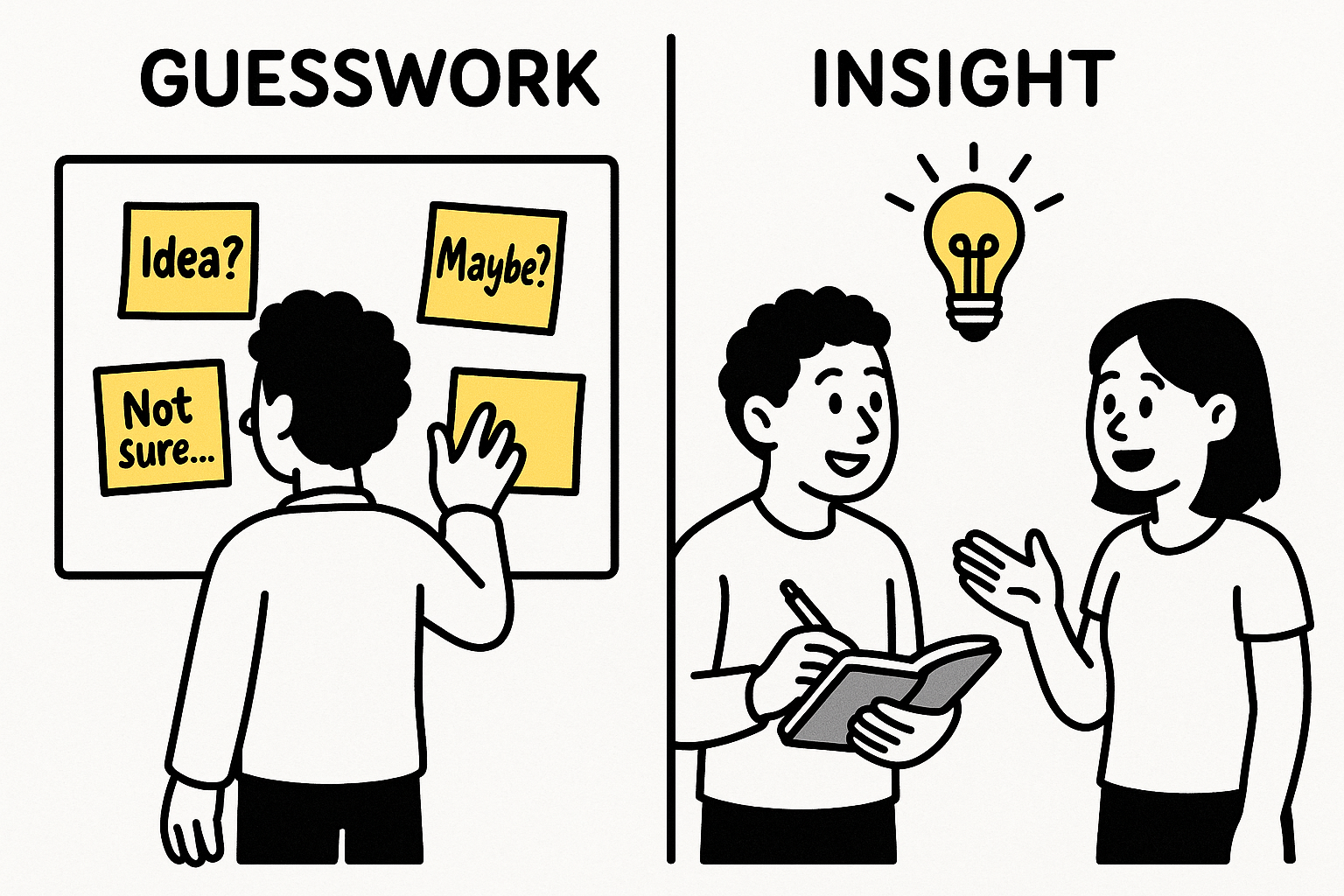
“How do you know?” is a question often asked of entrepreneurs. The response most often given begins with a hearty “Well, I think…”. That’s where I stop them. They don’t know. In the crowded space and general noisiness of business startup, it’s difficult to find that differentiator to set you apart from your competition and clearly define your value to your customers. Instead, most will bravely embark upon their entrepreneurial journey, “great idea” in hand with nothing more than a nod from those who love them the most…and hope. As far as strategies go, hope is at the bottom of the list. Bravery is characterized by knowing and understanding the dangers and ultimately choosing to proceed anyway. What they’re doing…isn’t that. If only there was a way to test their hopes and assumptions, to find out what customers really wanted, to understand their most important pain points, to derisk the risk and be able to say, “I know because…”.
Customer discovery is the foundational, and often neglected, step of business startup that unlocks the door to the elusive details around who your customers are and what they’re really thinking, wanting and needing. It can mean the difference between building a business that thrives and one that crashes miserably.
Yet, despite its importance, many entrepreneurs either skip it or don’t take it seriously enough. Perhaps they don’t have the time or they’re afraid of what they’ll hear, neither of which are valid reasons (Hint: there isn’t a valid reason). Let’s break down why customer discovery is essential, and how it can set your business on the path to lasting success.
What Is Customer Discovery?
Customer discovery is the process of engaging with potential customers early — while your “great idea” is still just that…an idea — to validate that you’re solving a real problem, for a real audience, with a solution they really want. It’s not about pitching or selling. It’s about listening, asking the right questions, testing your assumptions, and using feedback to shape your product/service, value proposition, and business model.
Why It Matters
- Avoids Building the Wrong Thing
Too many businesses fall into the trap of building out the “great idea”, only to realize after launch that no one else thinks it’s really that great. Customer discovery helps you test your idea in the real world with real customers before too much time or money have been invested, thus preventing costly “I think” missteps and pivots later on.
- Reveals the Real Problem
Often, the problem you think you’re solving isn’t the problem customers care about. Interviews and conversations (not surveys) allow you to discover the urgent and valuable pain points and give you the runway to adjust your solution accordingly.
- Sharpens Your Value Proposition
When you talk to customers, you gain valuable insight into their problems, needs, and frustrations. It helps you create a value proposition that speaks directly to them in their language, making it far more compelling than anything based on your assumptions alone.
- Validates (or Invalidates) Your Assumptions
Your “great idea” is built on assumptions: who your customers are, what they care about, how they behave. Customer discovery makes you test these assumptions early, which is why many entrepreneurs choose not to engage. They’re afraid of being wrong. But if they are wrong, they have the space to adapt. And if they’re right, they gain confidence in their direction.
- Builds Early Advocates
When people feel heard, they feel valued. Talking to potential customers early in the process can help you build relationships, refine your product/service with their input, and even gain your first customers and advocates.
- De-Risks Your Business Model
A brilliant product isn’t enough. You need to know who will buy it, how they’ll find you, and whether they’ll pay. Customer discovery informs not just your product, but your pricing, channels, and overall go-to-market strategy.
How to Get Started
- Define your hypotheses: Who are your customers? What problem are you solving? What’s your proposed solution?
- Talk to people: Set up interviews with potential customers. Ask open-ended questions and dig deep into their pain points.
- Look for patterns: Are people describing the same problems? Do they show strong interest in a solution?
- Iterate: Use what you learn to refine your idea, value proposition, or even your target market.
Final Thoughts
As the cornerstone of business success, customer discovery isn’t a one-time exercise — it’s a mindset, a way of thinking. It reminds you to stay humble, curious, and deeply connected to the people who will pay you – your customers.
Whether you’re starting up or staying up, investing in customer discovery will save you time and money, help you find product-market fit faster, and build a business that truly serves a need. It allows you to respond with “I know because…” when asked “How do you know?” And that knowledge is power.