
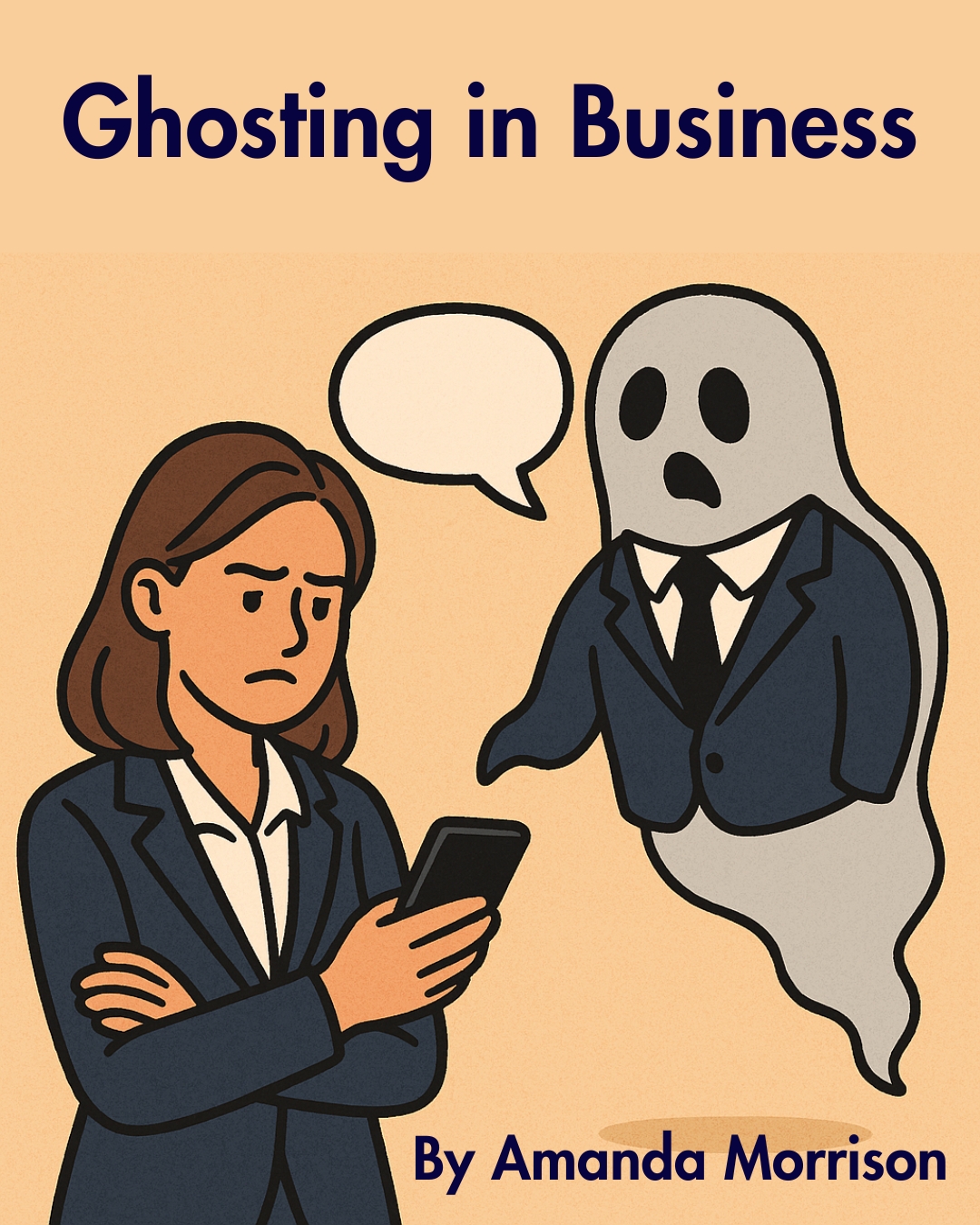
Ghosting isn’t just for dating apps anymore. In the professional world, ghosting has become an all-too-common (and frustrating) phenomenon. Whether you’re an entrepreneur waiting on a reply from a potential client, a contractor chasing an overdue payment, or a business owner following up on a proposal that seemingly vanished into the abyss, if you’ve been left hanging, you’ve been ghosted. And no, it’s not just you.
Let’s examine ghosting in business, explain why it occurs, and, most importantly, discuss how to avoid losing your cool or credibility.
What Does Ghosting Look Like in Business?
In a professional context, ghosting is when someone abruptly cuts off communication without explanation. That might look like:
- A client disappears after the initiation meeting
- A potential partner vanishing post-coffee chat
- A hiring manager who stops replying after a promising interview
- A customer who doesn’t pay (or even acknowledge the invoice)
No “Sorry, we went with someone else” or “We’ve decided to pause the project.” Just radio silence. You’re left refreshing your inbox and wondering if you should send a fourth follow-up or finally take the hint.
Why Does Ghosting Happen?
Let’s give people the benefit of the doubt for a moment. Sometimes, ghosting is the result of overwhelm. People get busy, inboxes overflow, and priorities shift. Sometimes, the silence isn’t personal; it’s just the byproduct of poor communication habits. Other times, though, ghosting is a conflict-avoidance strategy. Saying “no” feels uncomfortable, so instead of responding with honesty or closure, some folks choose silence, hoping the problem (i.e., you) will disappear. And then there are the few who ghost out of disregard, believing that ignoring you carries no consequences. (Spoiler alert: it does.)
How Ghosting Impacts Everyone Involved
If you’re the one being ghosted:
It sucks. There’s no elegant way to put it. It can feel disrespectful, confusing, and even demoralising—especially when you’ve invested time, energy, or emotional bandwidth into a project or proposal. From a business standpoint, ghosting disrupts workflows, delays planning, and forces entrepreneurs to waste precious hours chasing answers they shouldn’t have to hunt.
If you’re doing the ghosting:
It might seem convenient to avoid an awkward conversation, but it chips away at your professional reputation. Ghosting signals unreliability. People remember how you made them feel, especially in silence. Word travels fast in entrepreneurial circles. Being known as the “disappearing act” isn’t great for long-term trust or credibility.
How to Stay Professional When You're Being Ghosted
You don’t need to sink into ghost-level behaviour. Here’s how to take the high road and still protect your business:
- Follow Up (But Set a Limit)
A well-timed, polite follow-up shows initiative and persistence. But set a cap—two or three nudges max. After that, continuing to chase someone unwilling to respond makes you look desperate. Instead, shift the tone to closure.
Example: “I’m just circling back in case this got lost in your inbox. If I don’t hear back by 2026, I’ll assume this opportunity is no longer a fit. Thanks again for considering it.” - Document Everything
When money is involved, keep a paper trail. Save emails, invoices, and communications. You may have to escalate or use formal channels (collections, small claims, etc.), and receipts help. - Don’t Trash Talk (Tempting Though It Is)
Venting in your group chat is fair game. Blasting someone on LinkedIn? Not so much. Keep it classy. You never know who’s watching or when your paths might cross again. Being gracious under pressure speaks volumes. - Move On Strategically
Treat ghosting as a filter. Someone who ghosts today will save you the trouble of a poor partnership tomorrow. Reinvest your energy into people and projects that value your time.
Final Thoughts: Ghosting is Lazy, Not Leadership
As entrepreneurs, our time is one of our most valuable assets. Being ghosted isn’t just annoying—it’s unproductive. But how you respond says more about you than the silence ever could. Be the person who closes loops, communicates transparently, and sets the tone for professionalism. And when someone ghosts you? Wish them well (quietly), let them go, and keep building a business that values connection over avoidance. Because real entrepreneurs don’t vanish, they show up—even when the answer is “no.”